


Published
The Future of Bus Transportation: How Technology is Transforming Public Mobility
Introduction Public transportation has long been the backbone of urban mobility, connecting people, businesses, and communities. Among all transportation modes, buses remain one of the most flexible, cost-effective, and scalable solutions for moving large numbers of passengers. Today, rapid technological advancements are reshaping the bus industry, making transportation safer, smarter, cleaner, and more efficient than […]
Introduction
Public transportation has long been the backbone of urban mobility, connecting people, businesses, and communities. Among all transportation modes, buses remain one of the most flexible, cost-effective, and scalable solutions for moving large numbers of passengers. Today, rapid technological advancements are reshaping the bus industry, making transportation safer, smarter, cleaner, and more efficient than ever before.
This transformation is driven by innovations in electrification, autonomous systems, artificial intelligence, connectivity, and data analytics. Together, these technologies are creating a new generation of intelligent transportation systems designed to meet the growing demands of modern cities.
The Rise of Electric Buses
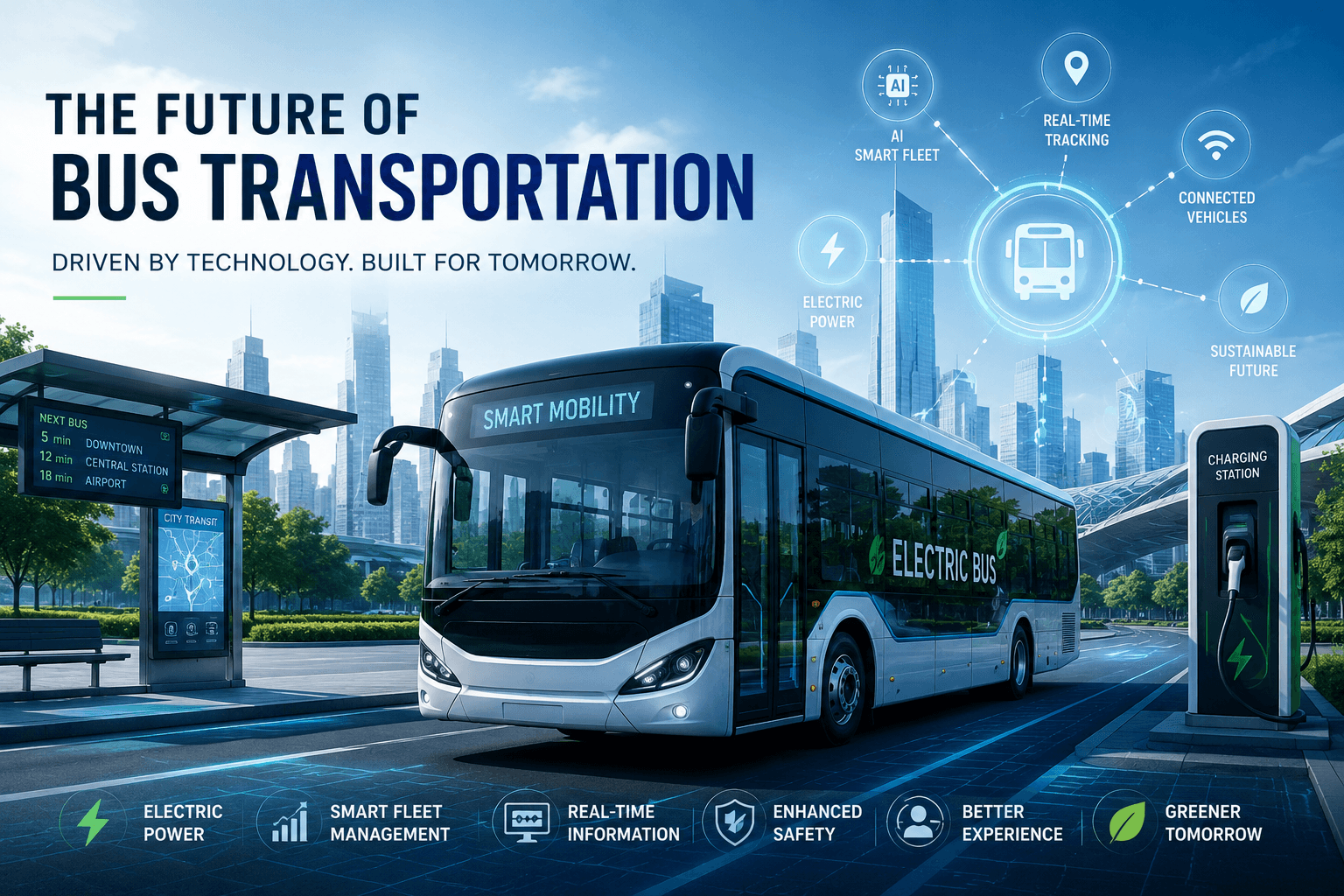
One of the most significant developments in transportation technology is the adoption of electric buses. Traditional diesel-powered fleets are gradually being replaced by battery-electric vehicles that offer substantial environmental benefits.
Electric buses provide:
- Zero tailpipe emissions
- Reduced noise pollution
- Lower operating costs
- Improved passenger comfort
- Reduced dependence on fossil fuels
Advancements in battery technology have increased driving range while reducing charging times, making electric buses a practical solution for both urban and intercity transportation.
Smart Fleet Management
Modern bus operators increasingly rely on intelligent fleet management systems. These platforms utilize GPS tracking, telematics, and cloud-based analytics to monitor vehicle performance in real time.
Key capabilities include:
- Real-time vehicle tracking
- Predictive maintenance
- Driver performance monitoring
- Fuel and energy consumption analysis
- Route optimization
By leveraging data-driven insights, transportation companies can reduce operational costs, improve service reliability, and enhance passenger satisfaction.
Artificial Intelligence in Public Transportation
Artificial Intelligence (AI) is becoming a critical component of modern transportation networks. AI-powered systems analyze vast amounts of operational data to improve efficiency and decision-making.
Applications include:
- Traffic prediction
- Dynamic route planning
- Passenger demand forecasting
- Automated incident detection
- Intelligent dispatching
AI enables transit agencies to adapt services based on real-time conditions, reducing delays and improving overall system performance.
Connected and Intelligent Vehicles
The emergence of connected vehicle technologies allows buses to communicate with infrastructure, control centers, and other vehicles.
Vehicle-to-Everything (V2X) communication supports:
- Traffic signal prioritization
- Collision avoidance
- Real-time traffic updates
- Emergency response coordination
- Enhanced road safety
These technologies contribute to smoother traffic flow and help reduce congestion in busy urban environments.
Advanced Passenger Experience
Technology is also transforming the passenger experience. Today’s travelers expect convenience, accessibility, and real-time information throughout their journey.
Modern bus systems now offer:
- Mobile ticketing
- Contactless payments
- Real-time arrival information
- Onboard Wi-Fi
- USB charging ports
- Passenger information displays
Digital platforms provide travelers with accurate updates and seamless trip planning, making public transportation more attractive and user-friendly.
Autonomous Bus Technology
Although still in the early stages of deployment, autonomous driving technology is rapidly advancing. Pilot projects around the world are testing self-driving buses in controlled environments and dedicated transit corridors.
Potential benefits include:
- Improved safety
- Reduced operational costs
- Increased service availability
- Enhanced accessibility for underserved areas
While regulatory and technical challenges remain, autonomous buses are expected to play an increasingly important role in future transportation networks.
Sustainability and Green Mobility
Governments and transit agencies worldwide are prioritizing sustainability initiatives to reduce carbon emissions and improve air quality.
Emerging green transportation technologies include:
- Electric propulsion systems
- Hydrogen fuel cell buses
- Renewable energy charging infrastructure
- Smart energy management systems
- Sustainable manufacturing practices
These innovations support global efforts to create cleaner and more resilient transportation ecosystems.
Data-Driven Transportation Networks
The future of public transportation will be built on data. Sensors, IoT devices, and cloud platforms continuously collect information about vehicles, infrastructure, traffic conditions, and passenger behavior.
This data enables:
- Better planning decisions
- Improved operational efficiency
- Enhanced safety management
- Optimized resource allocation
- More responsive transit services
As cities continue to grow, data-driven transportation systems will become essential for managing increasingly complex mobility demands.
Conclusion
The bus transportation industry is undergoing a technological revolution. From electric propulsion and artificial intelligence to connected vehicles and autonomous systems, innovation is reshaping how people move within cities and across regions.
Organizations that embrace these technologies will be better positioned to deliver safer, more sustainable, and more efficient transportation services. As smart cities continue to evolve, advanced bus technologies will remain at the forefront of the global mobility transformation.
The future of transportation is not just about moving people—it is about creating intelligent, connected, and sustainable mobility ecosystems that improve quality of life for everyone.